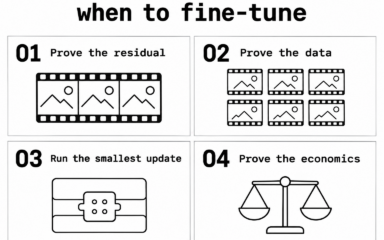
A decision framework for knowing when inference-time control is no longer enough for video generation.
Blog
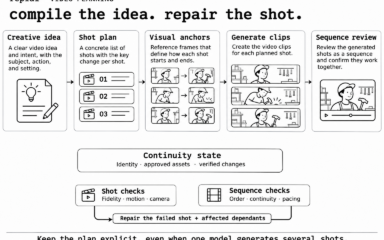
Video generation is a planning problem
Controllable AI video looks more like compilation than prompting: explicit shot plans, visual anchors, selective continuity state and local repair.
Blog
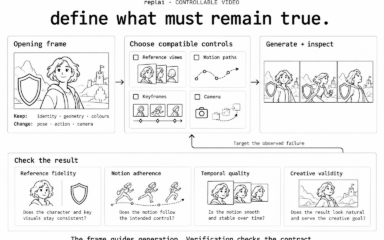
The first frame is a contract, not a thumbnail
Controllable AI video starts with a clear opening frame. Define what must remain true, add compatible motion controls, and evaluate fidelity, movement and creative validity.
Blog
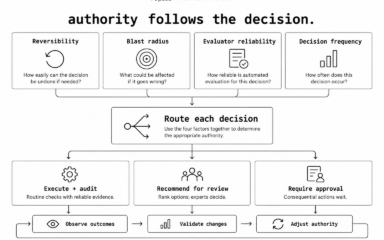
The Goal Is Not Maximum Autonomy
Bounded autonomy assigns authority to each decision based on reversibility, blast radius, evaluator reliability and frequency. Human attention goes where it changes the outcome.
Blog
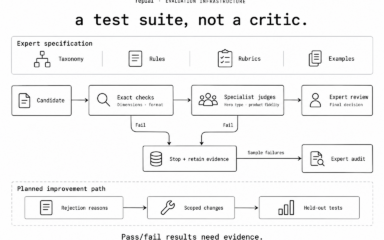
AI video evals should behave like a test suite, not a critic
AI video evaluation needs explicit tests, deterministic checks, specialist judges and selective expert review. Each decision needs evidence, and each evaluator needs validation.
Blog
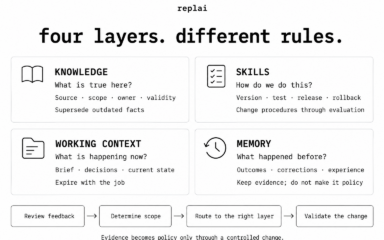
Stop calling everything agent memory
Facts, procedures, current work and past experience need different rules. Separate knowledge, skills, working context and memory by scope, ownership and update policy.
Blog
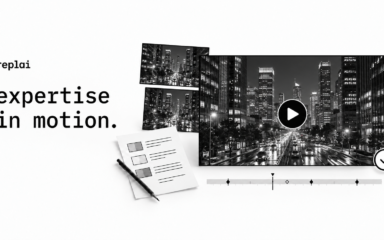
From expert judgement to executable creative workflows
How Replai is building a system that increases creative experimentation without throwing away the expertise that made the original work good.
Get Replai to start generating video for you
If the content on this page resonates, you should probably be talking with us already. Tell us what caught your eye and we will book a demo in hours.